Why Every Business Needs CCTV Installation: The Complete Guide to Business Security and Surveillance Systems
In today’s fast-paced business environment, protecting your employees, customers, assets, and sensitive information has become more important than ever. Whether you operate a small retail shop, a corporate office, a warehouse, or an industrial facility, security threats such as theft, vandalism, unauthorized access, and workplace incidents can negatively impact your business operations and profitability.
One of the most effective ways to strengthen business security is through professional CCTV installation. Modern CCTV cameras provide continuous monitoring, helping business owners identify risks, prevent criminal activity, and maintain a safer working environment. Unlike traditional security measures that rely solely on guards or alarm systems, today’s intelligent surveillance systems offer real-time monitoring, remote access, high-definition recording, and smart analytics that work around the clock.
For many organizations, investing in office CCTV is no longer considered an optional upgrade—it has become an essential part of a comprehensive security strategy. A well-designed CCTV system not only deters criminals but also provides valuable evidence when incidents occur, helping businesses resolve disputes quickly and accurately.
This comprehensive guide explains everything you need to know about CCTV installation, including its benefits, different types of CCTV cameras, planning your security system, choosing the right installer, legal considerations, and how surveillance technology can protect your business for years to come.
Understanding CCTV Installation and Its Importance
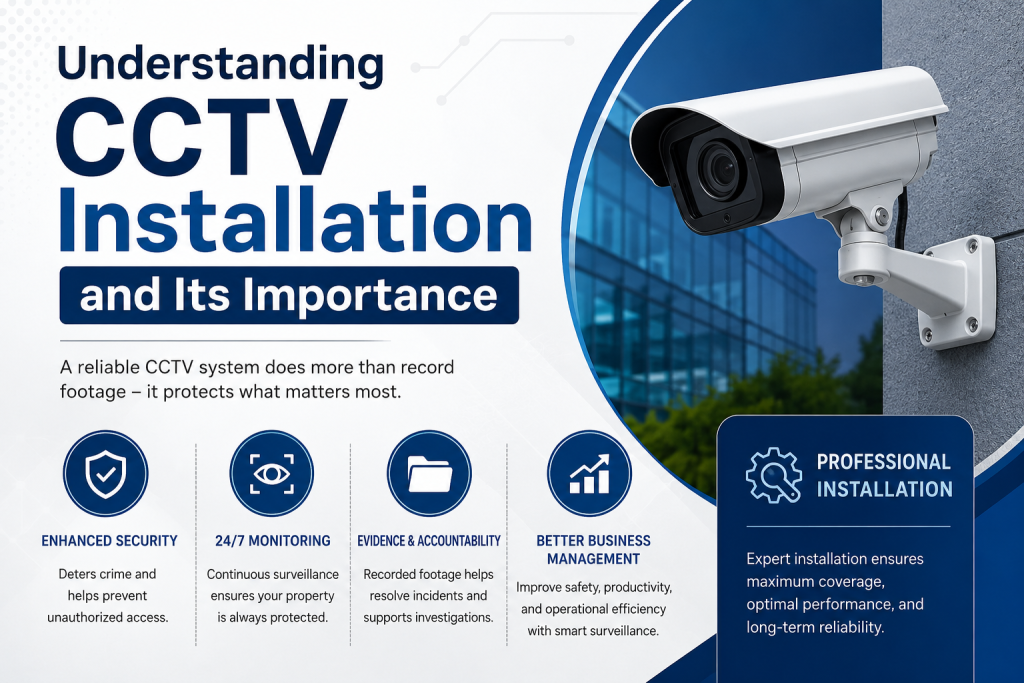
Closed-Circuit Television (CCTV) is a private video monitoring system that records and transmits footage to authorized users through secure devices such as monitors, network video recorders (NVRs), digital video recorders (DVRs), or cloud-based platforms. Unlike public broadcasting systems, CCTV footage remains accessible only to authorized personnel, making it a highly secure method of monitoring business premises.
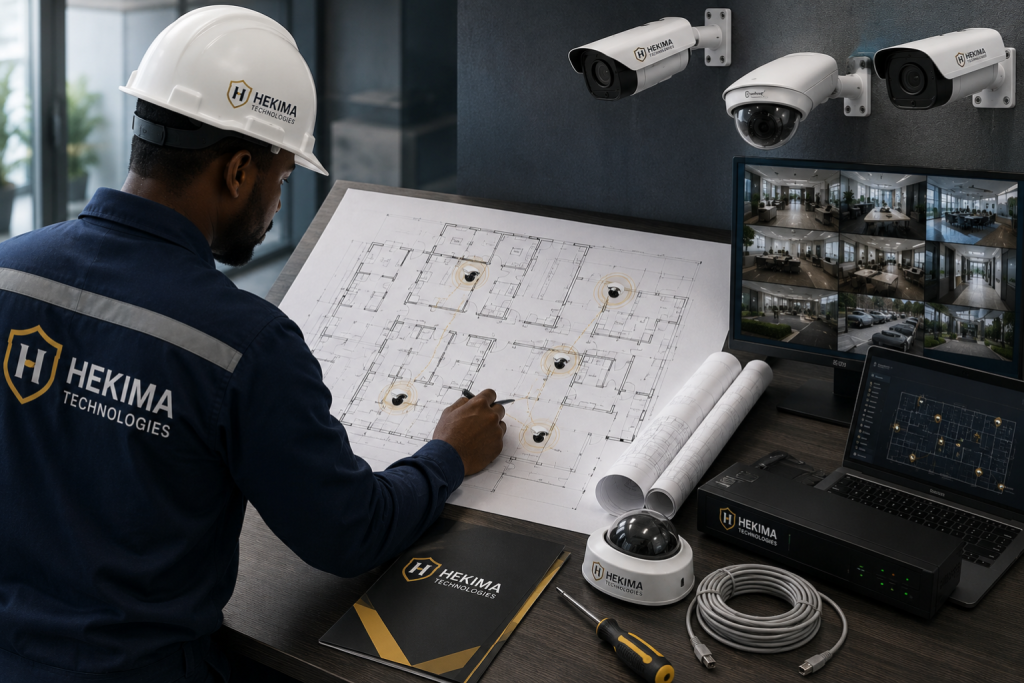
Professional CCTV installation involves much more than simply mounting cameras on walls. It requires careful planning to ensure complete coverage of vulnerable areas, proper camera positioning, reliable recording equipment, secure network configuration, and ongoing maintenance.
Modern surveillance systems can monitor your business 24 hours a day, seven days a week, providing continuous protection even when your office is closed. Whether you’re at home, travelling, or attending meetings, cloud-enabled systems allow you to view live footage from your smartphone, tablet, or computer.
For businesses of all sizes, this level of visibility provides greater control, faster response to incidents, and improved operational oversight.
Why CCTV Cameras Are Essential for Business Security
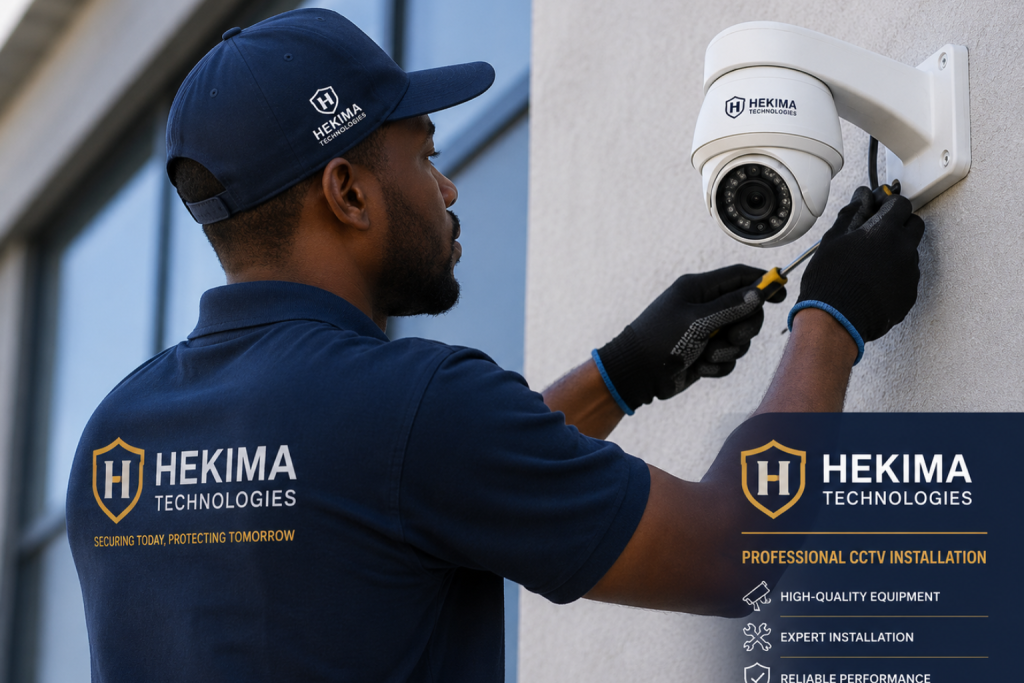
Every business owns valuable assets that require protection. Computers, servers, inventory, confidential documents, machinery, vehicles, and office equipment represent significant investments that can become targets for theft or vandalism. Installing high-quality CCTV cameras creates multiple layers of protection.
Crime Prevention
Visible cameras discourage criminals from attempting theft, burglary, or vandalism. Most offenders prefer easy targets, and the presence of professional surveillance systems often convinces them to leave before committing a crime.
A properly installed CCTV system acts as a powerful visual deterrent, significantly reducing criminal activity around commercial premises.
Employee Safety
A safe workplace improves employee confidence and productivity.
Modern office CCTV helps monitor entrances, exits, reception areas, parking lots, warehouses, and shared workspaces, ensuring employees feel secure throughout the working day.
In emergencies, recorded footage also assists management and emergency responders in understanding exactly what occurred
Protecting Business Assets
Businesses invest thousands—or even millions—of rand in equipment and inventory.
Professional CCTV installation helps safeguard these valuable assets by providing continuous monitoring and instant access to recorded evidence if anything goes missing.
Insurance companies may also look more favourably on businesses with professionally installed security systems, potentially reducing insurance premiums.
Evidence Collection
Should an incident occur, recorded footage provides reliable evidence.
Whether investigating theft, workplace accidents, customer disputes, or unauthorized access, high-definition CCTV cameras can capture important details that help management make informed decisions and support legal proceedings if necessary.
Key Benefits of Office CCTV Systems
Businesses that invest in professional office CCTV enjoy benefits that extend well beyond crime prevention.
Improved Workplace Productivity
Employees tend to follow workplace procedures more consistently when they know the premises are monitored professionally.
This encourages accountability while helping managers identify workflow improvements and operational inefficiencies.
Reduced False Claims
Unfortunately, businesses occasionally face fraudulent insurance claims or false allegations.
Accurate surveillance footage provides an unbiased record of events, protecting both employers and employees.
Remote Business Monitoring
Modern IP-based surveillance systems allow business owners to monitor operations remotely from anywhere in the world.
Whether you’re attending a conference, travelling overseas, or working from home, you can instantly view live footage through secure mobile applications.
Better Customer Experience
Retail stores, reception areas, hotels, and customer service centres use CCTV to monitor customer interactions and identify opportunities to improve service quality.
Management can also review footage for staff training purposes.
Regulatory Compliance
Many industries require businesses to maintain security measures for compliance purposes.
Professional CCTV installation helps organizations meet regulatory requirements while protecting confidential information and sensitive business operations.
Types of CCTV Cameras for Commercial Properties
Choosing the right CCTV cameras is essential for building an effective business security solution. Different camera types are designed for specific environments and operational requirements.
Dome CCTV Cameras
Dome cameras are among the most popular choices for offices, retail stores, reception areas, restaurants, and commercial buildings.
Their discreet appearance makes it difficult for people to determine exactly where the camera is pointing, increasing their effectiveness while maintaining a professional aesthetic.
Ideal for:
- Offices
- Reception areas
- Retail stores
- Meeting rooms
- Hallways
Bullet CCTV Cameras
Bullet cameras are easily recognizable due to their long cylindrical design.
These cameras offer excellent long-distance viewing and are commonly installed outdoors to monitor parking areas, entrances, loading bays, and perimeter fencing.
Their visible design also serves as an effective crime deterrent.
Ideal for:
- Parking lots
- Building entrances
- Warehouses
- Perimeter security
- Industrial facilities
PTZ Cameras (Pan-Tilt-Zoom)
PTZ cameras provide exceptional flexibility by allowing operators to remotely pan, tilt, and zoom across large areas.
These intelligent cameras are commonly used in shopping centres, factories, warehouses, airports, and large office buildings where broad coverage is required.
Because one PTZ camera can monitor multiple locations, businesses often reduce the number of fixed cameras required.
IP CCTV Cameras
IP (Internet Protocol) cameras represent the latest generation of CCTV cameras.
They deliver crystal-clear high-definition video, cloud storage integration, artificial intelligence features, motion detection, facial recognition (where legally permitted), and remote viewing through secure mobile applications.
Many businesses now prefer IP cameras because they offer superior image quality and advanced functionality compared to traditional analogue systems.